
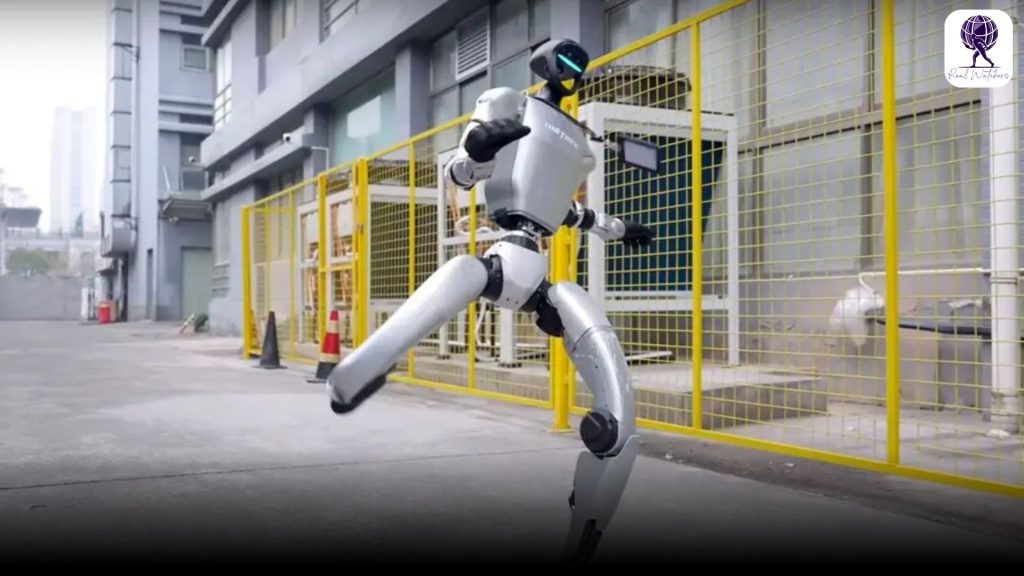
LimX Dynamics, a Chinese robotics firm, has introduced its newest humanoid robot, the LimX Oli. Standing at 5’4″, this advanced machine boasts 31 degrees of freedom, enabling it to perform fluid movements, including martial arts. The latest iteration of the robot, an enhancement over the previous year’s LimX CL-1 model, targets AI researchers and developers engaged in cutting-edge robotics projects.
The LimX Oli transcends the boundaries of a conventional lab project, showcasing its ability to walk at a speed of 5 km/h, carry 3 kg per arm, and execute dynamic movements. This versatility positions it as an optimal candidate for testing a range of applications, from kung fu-inspired motions to practical industrial tasks. The modular design facilitates the replacement of arms, hands, and sensors, offering choices such as two-finger grippers or five-finger dexterous hands for developers.
In a departure from the trend of humanoid robots confined to corporate laboratories, LimX Oli is being actively marketed to researchers and developers. It is available in three distinct configurations—Lite, Edu, and Super—each designed to meet varying research requirements.
The robot is equipped with cloud-based AI and large language models (LLMs) on board, enabling it to process natural language commands effectively. This capability allows for the integration of data from cameras, microphones, and LiDAR sensors, enhancing its interaction with the real world. Motion control is overseen through libraries that are consistently updated and distributed through over-the-air updates.
The robot showcases various martial arts movements, yet it is fundamentally regarded as a research tool instead of a commercial product. At the same time, it may not be the inaugural humanoid to showcase martial arts skills, but its unique blend of modular architecture and user-centric design positions it as a potentially impactful asset for robotics research.
The launch takes place against a backdrop of heightened global interest in adaptable humanoid platforms, as firms such as Boston Dynamics and Tesla explore a range of commercial uses for robotic mobility and artificial intelligence integration.